Roofing contractor
Roof repair, installation, and inspection for homes in Simpsonville and nearby areas.
- Roof Repair
- Roof Installation
- Roof Inspection
- Roof Damage Repair
- Roof Repair for Storm & Wind Damage
Asheville sits at more than 2,100 feet elevation in the Blue Ridge Mountains, and that elevation changes the roofing equation in ways that set it apart from every other city in this service area. Higher elevation means more intense UV radiation, stronger wind exposure, and colder winters with freeze-thaw cycles that stress flashing sealants and contribute to ice damming on roofs with inadequate insulation or ventilation. The city receives roughly 47 inches of annual rainfall, concentrated heavily in summer months, which puts constant moisture stress on drainage, seals, and granule adhesion. Asheville's housing stock ranges from early-1900s historic homes in the Montford Historic District and Downtown to post-WWII ranch and split-level homes in West Asheville, North Asheville, Kenilworth, and Oakley, each with its own set of roofing vulnerabilities.
Asheville, NC
SC Service Area
Communities we serve
Asheville, NC
Roofing Contractor
Asheville's location above 2,100 feet in the Blue Ridge Mountains means roofs here face higher UV intensity and stronger wind exposure than roofs at lower elevations in the Carolinas. Homes at higher elevations within the metro, including properties in North Asheville and the ridgeline communities above West Asheville, experience more intense conditions than valley properties near the French Broad River. That elevation variation creates microclimates where the same shingle product performs differently depending on the specific site.
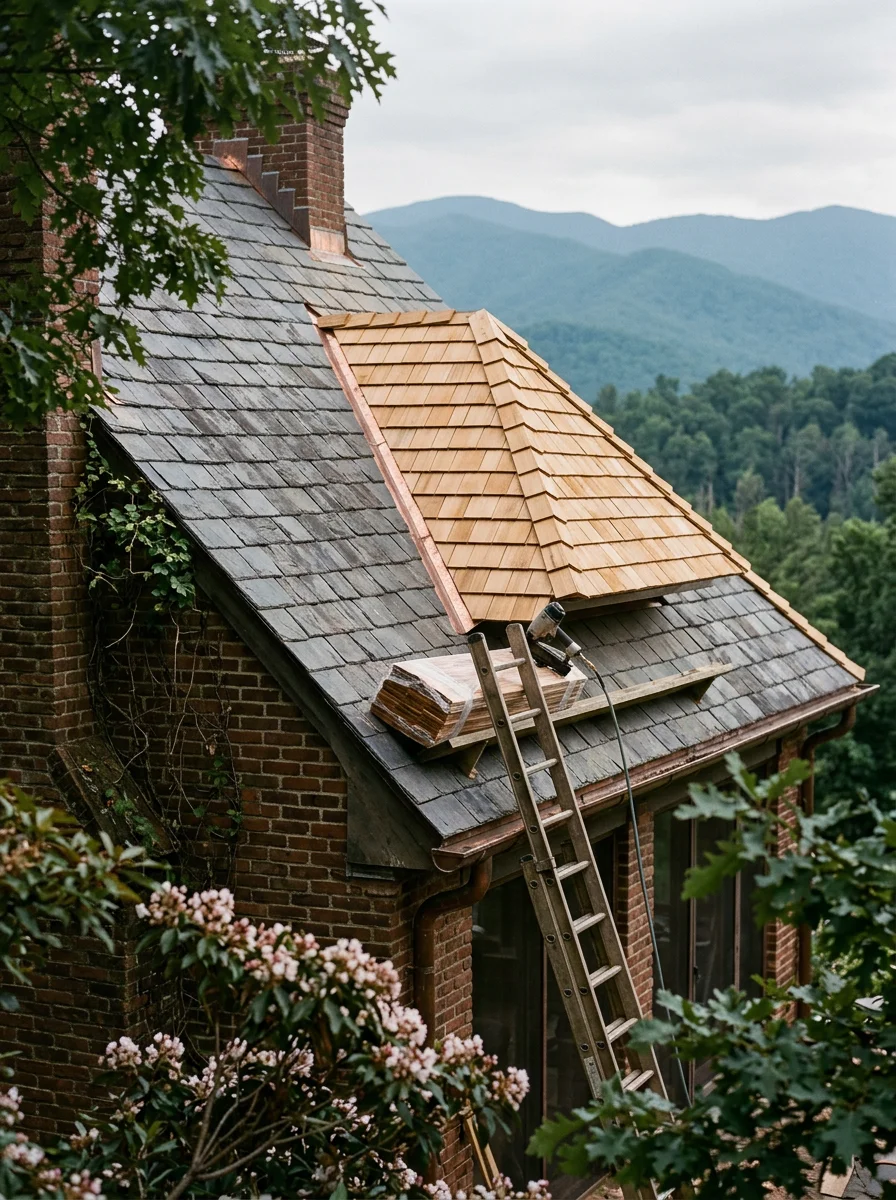
Historic homes in the Montford Historic District and Downtown Asheville often feature original slate and tile roofing from the early 1900s that requires specialized repair techniques. Post-WWII ranch and split-level homes in West Asheville, Kenilworth, and Oakley typically have asphalt shingle systems installed in the 1960s through 1980s that are at or past replacement age. The freeze-thaw cycles common in Asheville's winter climate worsen existing small cracks and flashing gaps, turning minor issues into major problems before the next inspection.
Asheville's summer rainfall, with the heaviest precipitation concentrated from June through August, overwhelms gutters that are undersized or clogged with debris from the area's abundant hardwood and conifer canopy. Gutter installation sized for high-volume flow and secured with corrosion-resistant hardware is the right standard for mountain properties. Proper attic venting installation paired with adequate insulation is equally important, because ice dam formation on under-ventilated roofs is a recurring winter problem across the metro.
At a glance
Roof repair in Asheville frequently involves ice dam damage on homes with inadequate attic insulation and ventilation, where warm attic air melts snow at the ridge and refreezes it at the cold eaves, forcing water under shingles. Roof installation at Asheville's elevation requires materials and fastening patterns suited to higher wind exposure and the freeze-thaw cycling that stresses sealants and flashing joints through the winter months. Attic venting installation is a critical service here because balanced soffit-to-ridge airflow prevents both the summer heat buildup that degrades shingles and the winter condensation that promotes mold on the underside of the decking. Gutter installation matters throughout the city because Asheville's heavy summer rainfall and fall leaf load from abundant hardwoods create chronic overflow conditions that damage fascia and soffit on homes across every neighborhood.
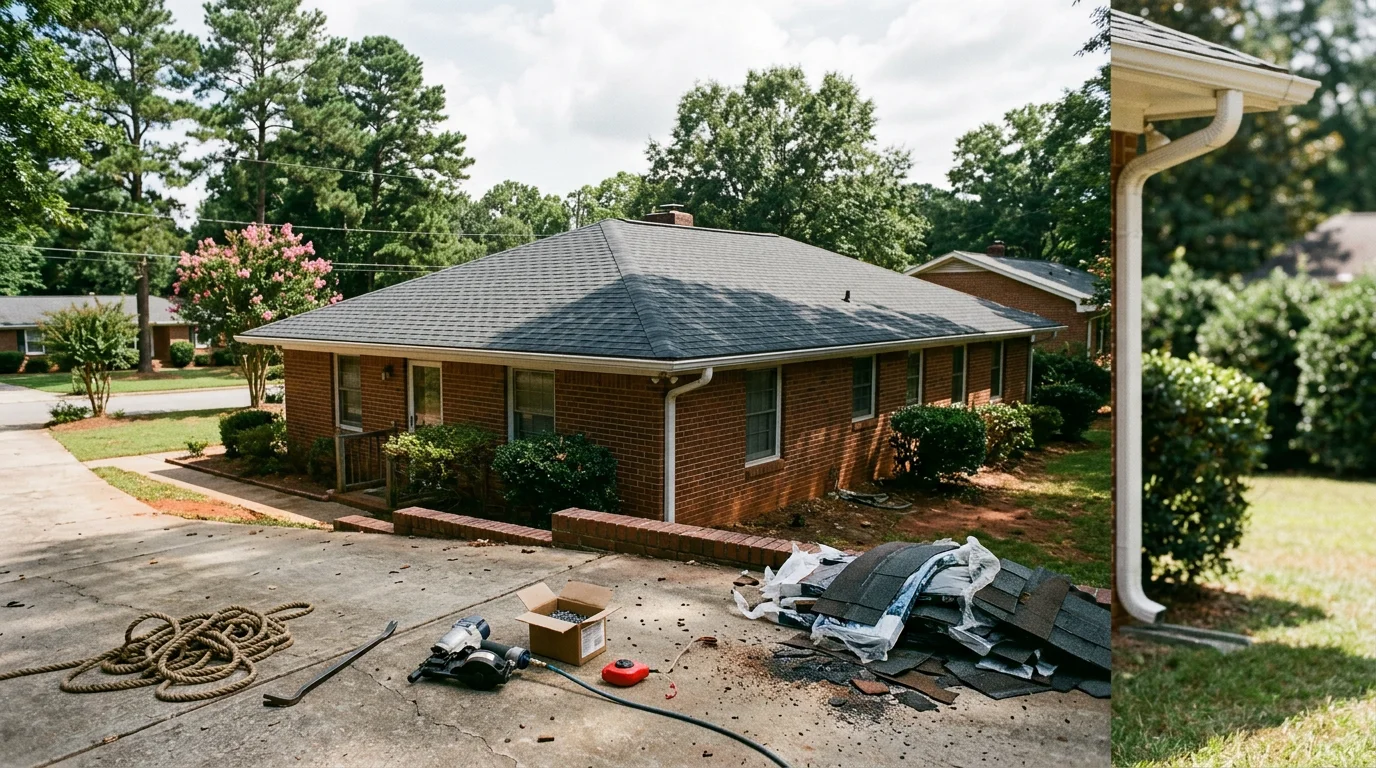
Roof repair, installation, and inspection for homes in Simpsonville and nearby areas.
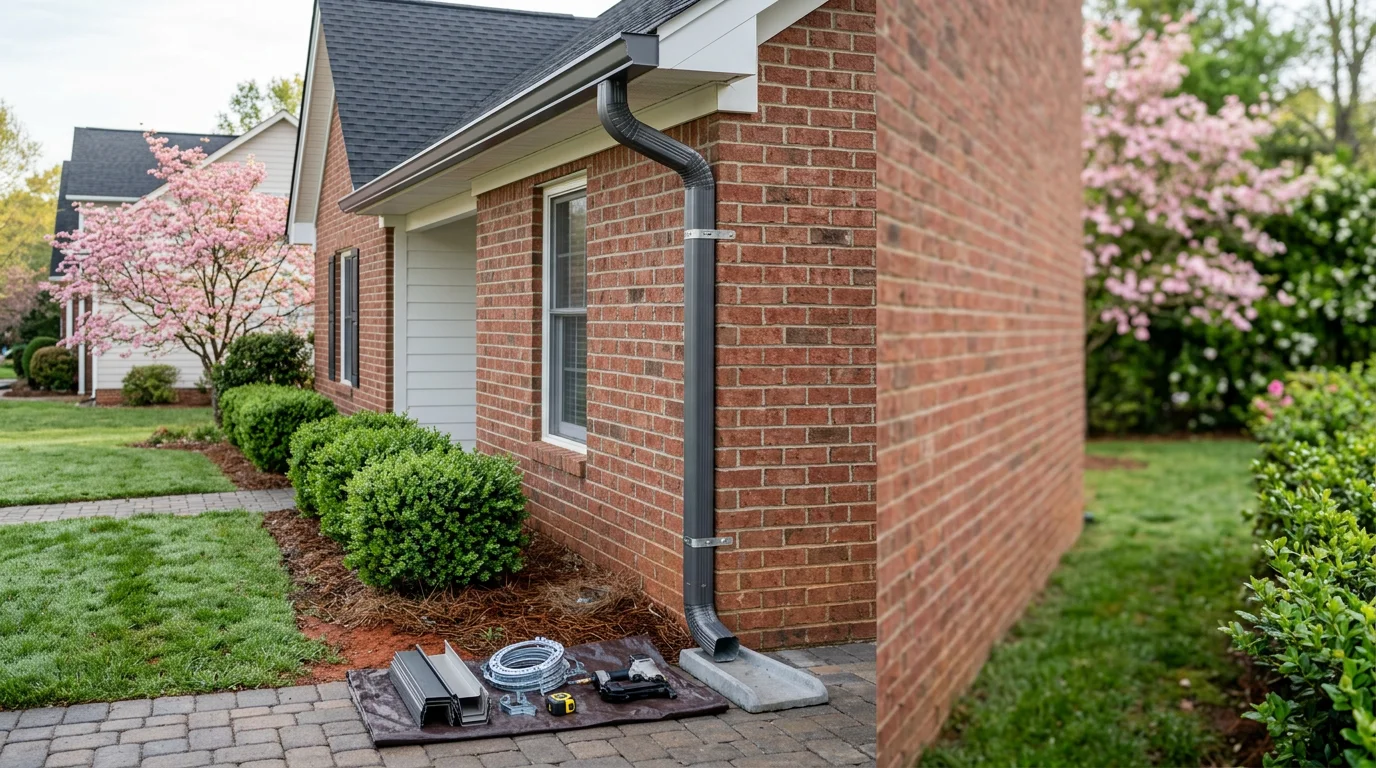
Gutter installation and repair for homes in Simpsonville and nearby areas.
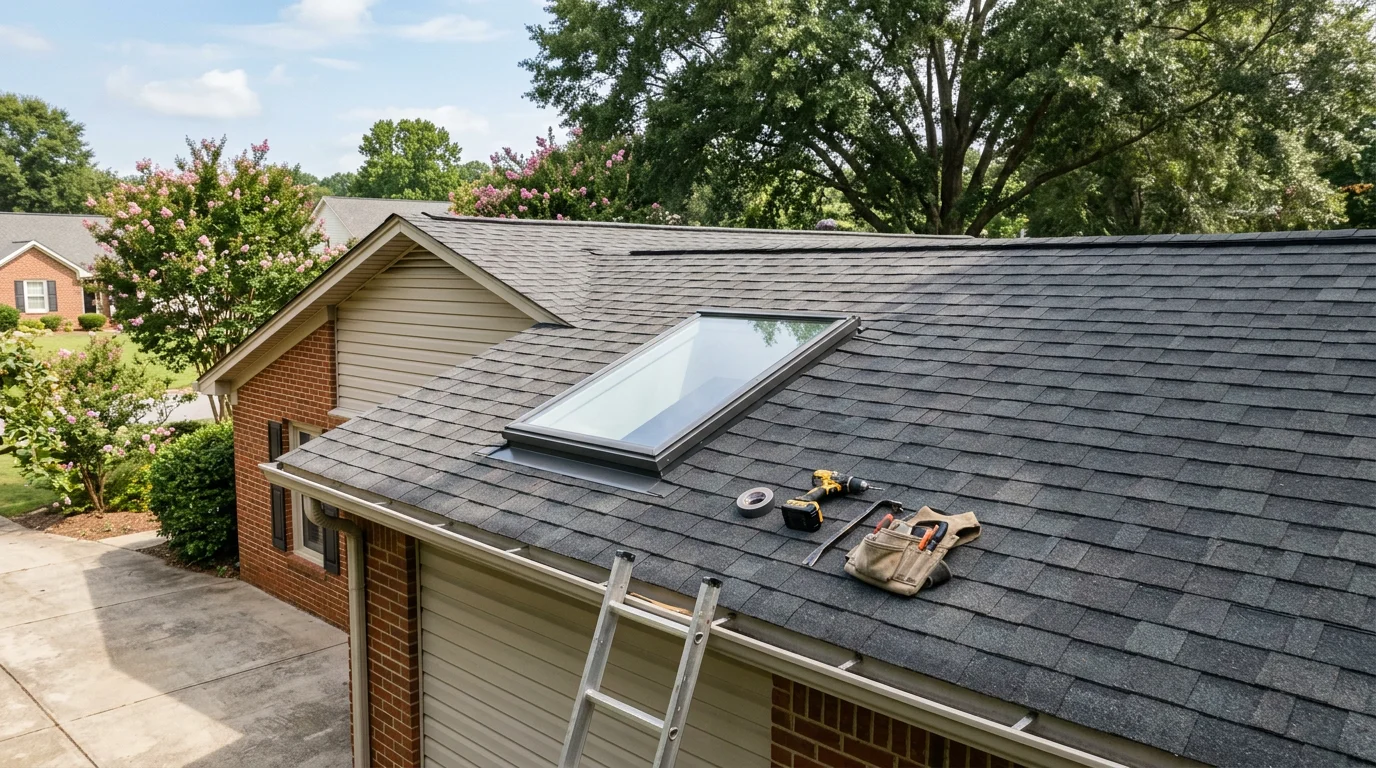
Skylight installation and repair for homes across South Carolina.
Worked with us?
Leave a ReviewWorked with us?
Leave a ReviewNo qualifying reviews with text to display yet (only 4+ star reviews with a written comment are shown).
Serving Asheville, NC
Our crew knows Asheville, NC. We will show up on time, assess the job honestly, and give you a clear written number before asking you to decide anything.
Also serving across Upstate South Carolina:
Common questions from Asheville, NC customers about our services, process, and coverage.
Asheville's location above 2,100 feet in the Blue Ridge Mountains exposes roofs to higher UV intensity and stronger wind loads than lower-elevation cities in the Carolinas. That UV intensity accelerates granule loss on asphalt shingles, and the stronger winds stress ridge caps and flashing joints more aggressively than in the Piedmont or Lowcountry. Freeze-thaw cycles in winter also work their way into small cracks and sealant gaps, shortening the effective life of materials that would last longer in a milder climate.
Ice dams form when warm attic air melts snow at the ridge and the meltwater refreezes at the cold eaves, where it backs up under shingles and forces water into the attic and interior framing. The root cause is inadequate attic insulation and ventilation, not the weather itself. Attic venting installation that balances soffit intake with ridge exhaust, combined with adequate insulation, keeps the roof deck cold enough to prevent the melt-refreeze cycle that creates ice dams.
Yes, for several reasons. Historic homes in the Montford District often feature original slate or tile roofing from the early 1900s that requires specialized repair techniques and, in some cases, approval from Asheville's Historic Resources Commission before material changes can be made. The steep pitches and complex rooflines common on these properties also require staging and safety equipment that adds to the project scope compared to a standard suburban replacement.
Asheville receives roughly 47 inches of annual rainfall, with the heaviest precipitation concentrated in summer months when afternoon thunderstorms are frequent. The area's abundant hardwood and conifer canopy also generates heavy debris loads that clog gutters faster than in less-wooded areas. Gutters that cannot handle the volume of water during a summer storm event overflow onto fascia and soffit, causing rot that compounds the roofing repair scope.
Call us directly. Real answers, no scripts.
Stop by, call, or book online — we're always nearby when you need us.
Phone
(864) 787-4228Hours